Frauenkloster
Site
Audio

Text
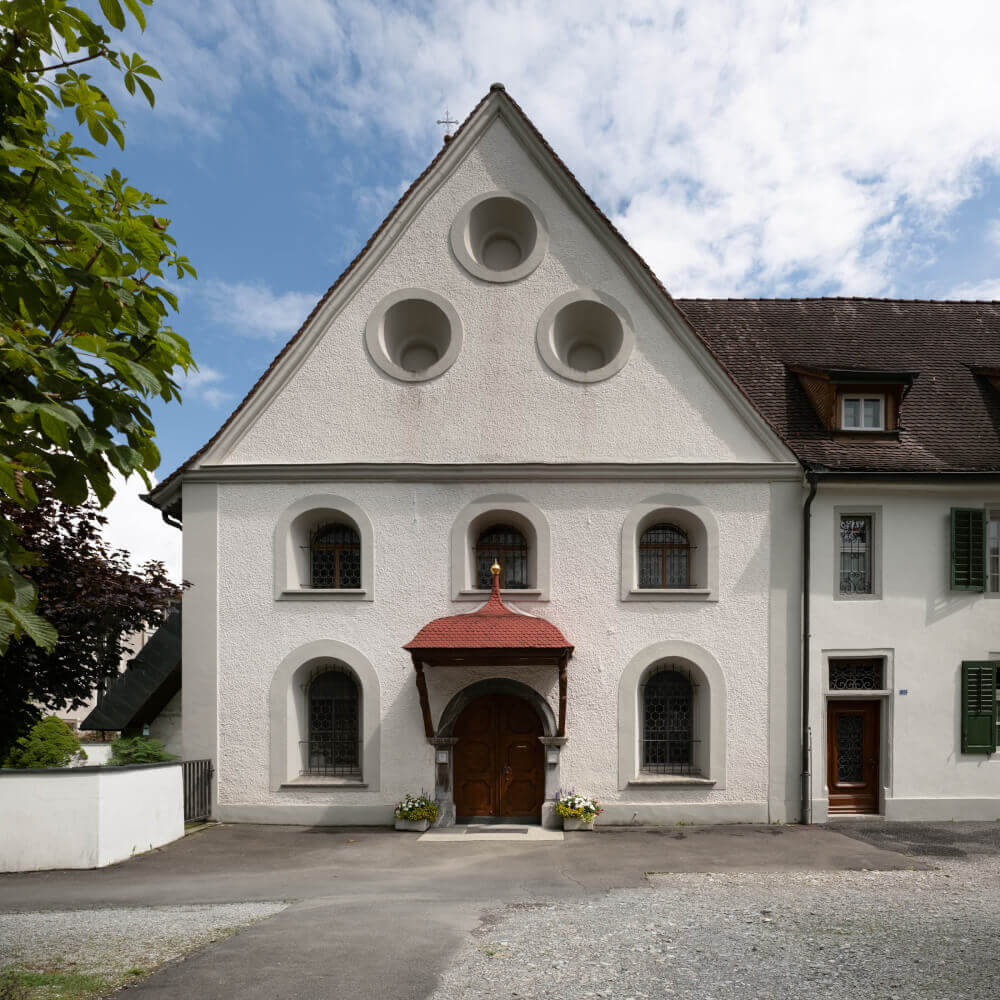
The Frauenkloster (Women’s Convent) in Sarnen traces its origins back to the early 17th century and is closely connected to the history of the Benedictine community of Engelberg.
From Engelberg to Sarnen
When the Abbey of Engelberg was founded in 1120, it was established as a double monastery, housing both monks and nuns. During the 13th and 14th centuries, the women’s community flourished and eventually outnumbered the monks. To ensure adequate provision, the number of nuns was limited to 100 in 1353.
By the late 16th century, the women’s convent entered a period of decline. Contemporary sources speak of economic and moral difficulties, although the precise reasons remain unclear. Eventually, a decision was made to relocate the community.
On 18 February 1615, the first nuns left Engelberg and travelled to Sarnen. They were accompanied by Wolfgang Stockmann, an influential Landammann (chief magistrate) from Sarnen and a Knight of the Holy Sepulchre. Stockmann, born around 1571, played a key political role as leader of the Spanish faction in Obwalden and ensured the safety of the nuns during the arduous winter journey.
Initially, the community was housed in a building near the village chapel. In 1618, the nuns moved into the newly constructed convent. The convent church was dedicated to Saint Benedict, and the monastery continued to grow.
The Sarner Jesus Child
One of the most important devotional objects associated with the convent is the Sarner Jesus Child, a Gothic wooden figure dating from the 14th century. According to legend, the figure was brought to the cell of a sick nun on Christmas Eve around 1360. It is said to have moved on its own, drawing up its right leg and placing its left hand over its heart. The event was first recorded in writing in 1634.
News of the miracle spread quickly, and the figure became the destination of pilgrimages. To this day, visitors seek comfort and intercession here, particularly pregnant women and those who are ill.
Vestments and Devotion
Depending on the liturgical season, the Sarner Jesus Child is dressed in different garments. Especially well known is a red velvet robe with gold embroidery, said to have belonged to Queen Agnes of Hungary. Whether this attribution is historically accurate remains uncertain, but the garment is a valuable example of courtly textile art.
The Convent Garden
Since the foundation of the convent, the garden has played a central role in the self-sufficiency and spiritual life of the nuns. Today, it is cultivated according to sustainable principles, combining monastic tradition with modern ecological awareness. Access to the garden is limited and only possible for registered participants in the self-harvesting scheme.
Glückwunsch
If you would like to learn more about the history and culture of Obwalden, then:
- Subscribe to the newsletter below
- Visit us at the Obwalden Museum from May 2027
- Or become a member of the Obwalden Historical Society
We look forward to seeing you!